About ABB VFDs
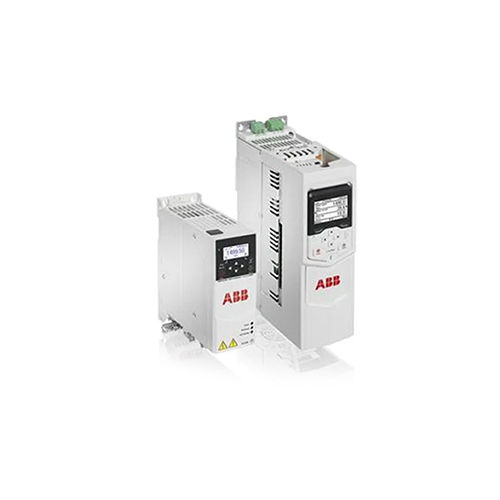
ABB VFD is an advanced motor control device used in industrial and commercial applications to regulate the speed and torque of AC motors. It typically consists of power electronics modules for converting AC power to DC and then back to variable-frequency AC power. These are used in pumps, fans, compressors, conveyors, mixers, extruders, and various other motor-driven equipment. They offer advanced control modes such as sensorless vector control, closed-loop control, and multi-motor control to achieve precise and dynamic motor performance in diverse applications. ABB VFD is known for its reliability, efficiency, and advanced features, making it a preferred choice for motor control solutions in industrial and commercial environments.
Precision Control MethodsWith selectable control modes including V/F, Vector Control, and DTC (Direct Torque Control), ABB VFDs deliver tailored performance for varying industrial motor requirements. This ensures optimum torque and accuracy, enhancing machine productivity and process reliability.
Flexible Connectivity and CommunicationABB VFDs come equipped with versatile portsRS485, Modbus, and Ethernet (depending on model)allowing seamless integration into modern automation systems. These facilitate real-time data exchange and enable remote control through fieldbus networks, ensuring efficient process management.
User-Centric Design and SafetyFeaturing easy-to-navigate LCD/LED digital displays and programmable inputs, ABB VFDs put control at your fingertips. Built-in safety mechanisms guard against over-current, short-circuit, and motor overload while providing efficient air cooling and overheating protection.
FAQs of ABB VFDs:
Q: How do I configure ABB VFDs for remote operation in my application?
A: ABB VFDs offer remote control capability via fieldbus communication using ports such as RS485, Modbus, or Ethernet, depending on the model. Configuration is easily performed using ABBs DriveComposer or ABB Drives configuration tools, enabling seamless integration into your control network.
Q: What benefits does Direct Torque Control (DTC) provide compared to traditional V/F control?
A: DTC enhances motor response and dynamic performance by directly controlling torque and flux in real time, resulting in higher accuracy, reduced speed fluctuations, and fast reaction to load changes. This makes DTC-driven VFDs ideal for demanding and precise industrial processes.
Q: When should I use the built-in braking chopper in ABB VFDs?
A: The built-in braking chopper (available in select models) is useful during rapid deceleration of high-inertia loads. It dissipates excess energy to maintain safe and controlled braking, preventing potential drive or motor damage and improving safety.
Q: Where can ABB VFDs be installed regarding mounting and environmental conditions?
A: ABB VFDs are suitable for wall, panel, or DIN rail mounting. With their IP65-rated enclosures and operating temperature range from -10C to +50C, they adapt well to industrial environments prone to dust, humidity (5%95%), and vibration.
Q: What is the process for speed setting on ABB VFDs?
A: Speed can be set either locally from the keypad for manual adjustment or remotely using a potentiometer for external control. Programmable digital inputs also allow automated or logic-based speed changes as required by the application.
Q: How do ABB VFDs ensure safety during usage?
A: ABB VFDs integrate multiple safety features such as over-current, motor overload, and short-circuit protection. Overheating protection and flame-retardant insulation further safeguard the system, ensuring stable and reliable operation in hazardous conditions.
Q: What are the main advantages of choosing IP65-rated ABB VFDs for industrial use?
A: IP65-rated ABB VFDs provide robust protection against dust and water ingress, making them ideal for harsh industrial environments. Their durable ABS/metal construction, efficient cooling, and dependable performance reduce maintenance costs and extend product lifespan.




 Send Inquiry


 Send Inquiry
 Send Inquiry
 Send SMS
 Call Me Free